
Product
Polypropylene sheet
Polypropylene is one of the lightest plastics and one of the most chemical resistant. Solid PP sheet is used for tanks, trays, bench tops, linings and anything that has to stand up to acids, alkalis and repeated cleaning.
Plastics Hub NZ supplies solid polypropylene sheet and rod.
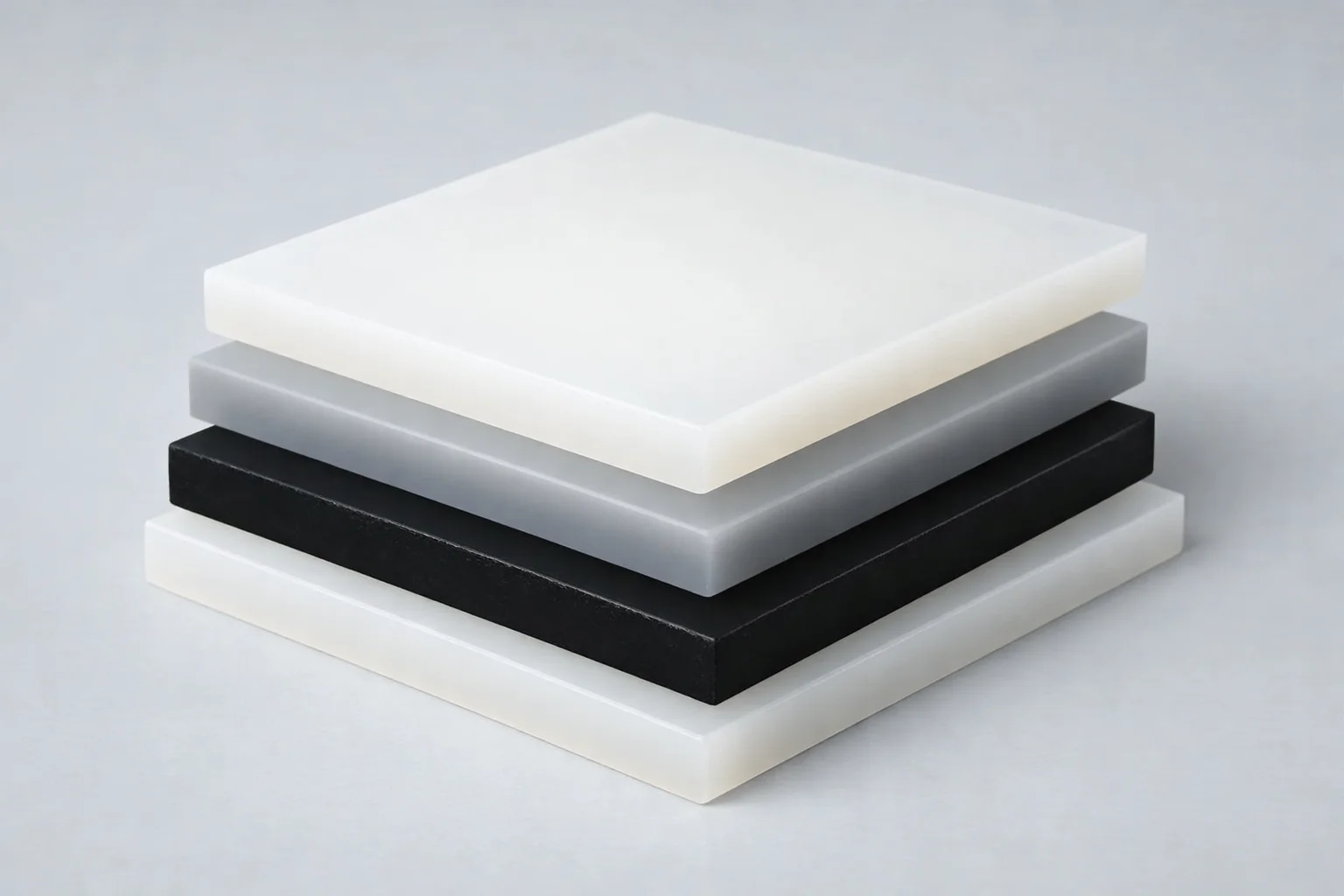
Shop Polypropylene
Our online Polypropylene range and prices are on the way.
Tell us the thickness, colour, homopolymer or copolymer if you know, sheet size and quantity, and we'll come back with a quote. Or email trade@plasticshub.co.nz.
Request a quoteWhat is Polypropylene?
Polypropylene (PP) is a thermoplastic from the same family as polyethylene. It comes as homopolymer, which is stiffer, and copolymer, which is tougher in the cold.
Thin PP has a natural hinge property: it can be folded again and again along a line without breaking, which is why it is used for folders and folded covers.
Key properties
Chemical resistant
PP resists most acids, alkalis and solvents at room temperature, which suits chemical tanks and lab work.
Light
Polypropylene floats on water and is lighter than most other plastics.
Handles more heat than polyethylene
PP keeps its shape at higher temperatures than HDPE, so it suits hot-water and wash-down duty.
Weldable
PP can be plastic welded, so tanks and trays are welded rather than glued.
Brittle in the cold
Homopolymer PP can be brittle at low temperatures; copolymer grades are tougher.
Typical uses
- Chemical tanks and trays
Plating tanks, bunds and drip trays.
- Lab and wash-down bench tops
Chemical-resistant work surfaces.
- Linings and splash guards
Wet and chemical areas.
- Folded covers and folders
Thin sheet that hinges along a fold.
- Corflute-style signs
For fluted PP sign board, see corflute.
Forms, thicknesses and sheet sizes
What Polypropylene commonly comes in. What we can source for you is confirmed on your quote.
- Forms
- Solid flat sheet and solid round rod. Fluted PP is listed separately as corflute.
- Common thicknesses
- From thin sheet of about 1mm up to 25mm or more, with 3mm to 10mm among the most used.
- Common sheet sizes
- Sheets are commonly 2440 x 1220mm and 3000 x 1500mm, depending on thickness.
- Common colours
- Natural (translucent white), white, grey and black.
How it compares
Polypropylene is stiffer than HDPE and handles more heat; HDPE is tougher in the cold. Rigid PVC is the other common tank and lining sheet, with good chemical resistance and easy gluing.
How to order
- Send us an enquiry through the quote form or email trade@plasticshub.co.nz.
- Tell us the thickness, colour, homopolymer or copolymer if you know, sheet size and quantity, and the town or city it is going to.
- We'll come back with a quote, including delivery.
Need it cut? Cutting is available on certain materials at certain depots. Request a quote with your sizes and we'll confirm.
Polypropylene questions
- Polypropylene or HDPE: which should I use?
- Polypropylene for hotter or more chemical duty, where it is stiffer. HDPE where impact toughness, cold weather or a food-prep surface matter more.
- Is polypropylene food safe?
- Food-contact grades of polypropylene are made. Confirm the grade with us if your job needs one.
- Can you cut polypropylene to size?
- Cutting is available on certain materials at certain depots. Request a quote with your sizes and we'll confirm.
Tell us what you need. We'll source it.
One enquiry, multiple supply sources. Or email trade@plasticshub.co.nz.