
Product
Acetal sheet
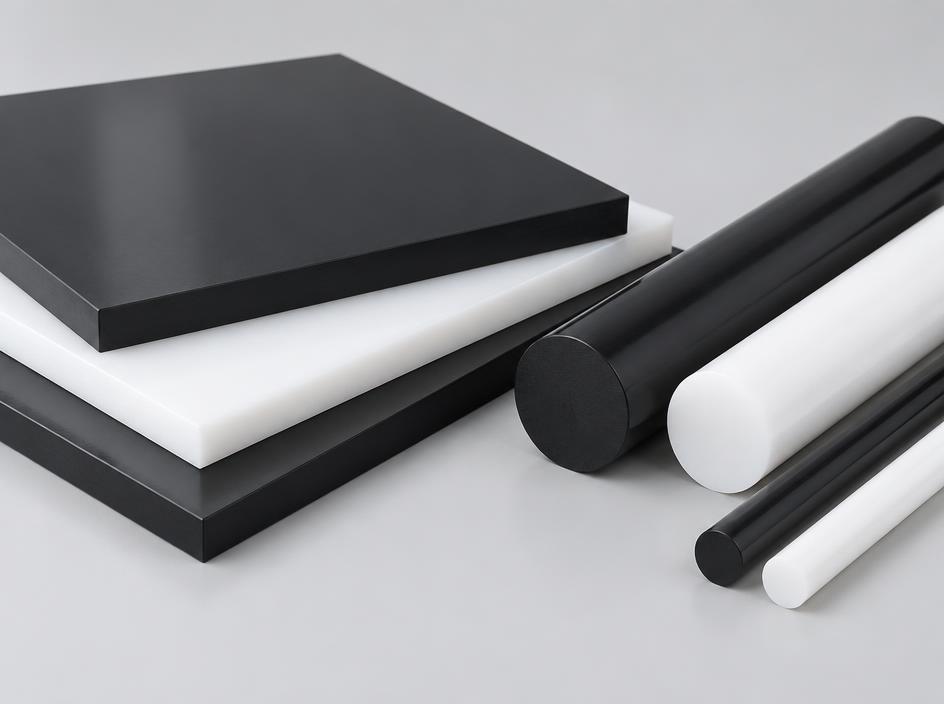
Acetal sheet, often called POM plate, is the engineering plastic for flat parts that must hold their size: jigs, fixtures, wear pads and milled components.
Plastics Hub NZ supplies acetal plate in natural and black. Tell us the thickness, plate size, colour and quantity, and we'll come back with a quote.
Shop Acetal sheet
Our online Acetal sheet range and prices are on the way.
Tell us the plate thickness and size, the colour, the grade if you know it, and quantity, and we'll come back with a quote. Or email trade@plasticshub.co.nz.
Request a quoteWhat is Acetal sheet?
Acetal is polyoxymethylene, usually shortened to POM. It comes as a copolymer, the general-purpose grade, and as a homopolymer, which is a little stiffer and stronger. Both are hard, smooth thermoplastics.
Natural acetal is an opaque white, and black is the other common colour.
Key properties
Stiff and dimensionally stable
Acetal absorbs very little moisture, so parts hold their size better than nylon in damp conditions.
Low friction and wear
It runs smoothly against itself and against metal, which suits gears, bushes and slides.
Machines very well
Acetal cuts cleanly with sharp tools and gives a good surface finish, a big reason engineers choose it.
Chemical resistance
It resists fuels, oils and many solvents, but not strong acids or chlorine-based cleaners over time.
Indoors by preference
Natural acetal is not UV stable. Black is better outdoors; confirm the grade with us for long sun exposure.
Typical uses
- Jigs and fixtures
Stable, smooth workshop tooling.
- Food-processing parts
In a grade suited to food contact; confirm the grade with us.
Forms, thicknesses and sheet sizes
What Acetal sheet commonly comes in. What we can source for you is confirmed on your quote.
- Forms
- Solid round rod and flat sheet (plate).
- Sheet
- Plate from about 6mm to 100mm thick, commonly in sheets of around 1000 x 2000mm or smaller cut pieces.
- Common colours
- Natural (white) and black.
How it compares
Acetal and nylon are the two everyday engineering plastics. Acetal is stiffer and more stable in the damp; nylon is tougher and better under shock loads. PTFE has lower friction still but is much softer.
How to order
- Send us an enquiry through the quote form or email trade@plasticshub.co.nz.
- Tell us the plate thickness and size, the colour, the grade if you know it, and quantity, and the town or city it is going to.
- We'll come back with a quote, including delivery.
Need it cut? Cutting is available on certain materials at certain depots. Request a quote with your sizes and we'll confirm.
Acetal sheet questions
- Acetal or nylon: which should I use?
- Acetal if the part must hold tight tolerances or will be wet. Nylon if it takes shock loads or needs to be tougher. Tell us what the part does and we'll suggest one.
- Can you cut acetal to length or size?
- Cutting is available on certain materials at certain depots. Request a quote with your sizes and we'll confirm.
Tell us what you need. We'll source it.
One enquiry, multiple supply sources. Or email trade@plasticshub.co.nz.